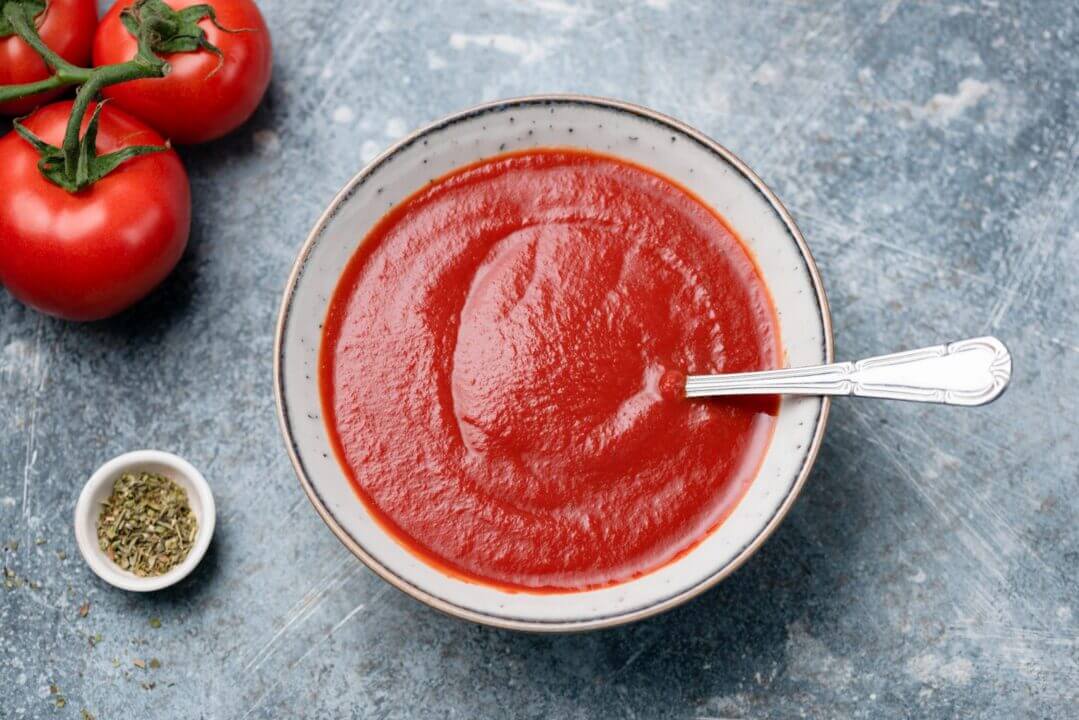
Tomato Paste Hot Break 30-32%
IQG Foods produces hot break tomato paste at 30-32% Brix from fresh Egyptian tomatoes, pressed within hours of harvest. The higher concentration carries more tomato solids per tonne than the standard 28-30% grade while holding the same thick hot break body. Packed aseptically in steel drums, bag in box or ton bins for a 24-month shelf life at ambient temperature.

Specifications



Applications

Packaging
Packaging
Weight
Storage
 20′ FCL
40′ FCL
Packaging
Sizes
Storage
20′ FCL · Loose
40′ FCL · 21 Pallets
 Wooden Ton Bins
Packaging
Weight
Storage
20′ FCL
40′ FCL
Why Buy at 30-32%
Hot break at 30-32% Brix sits between our standard 28-30% grade and the 36-38% cold break concentrate. It is the grade a buyer chooses when 28-30% means shipping more water than the formulation needs, but a full re-manufacturing concentrate would mean rebuilding body that hot break already provides.
The arithmetic is straightforward. A tonne of 30-32% carries roughly seven percent more tomato solids than a tonne of 28-30%. Across a 20ft container that difference adds up, and freight is charged on weight rather than on solids content.
What does not change is the body. Bostwick holds at 4.0 to 5.0 cm measured after dilution to 12.5 Brix, the same working range as our 28-30% hot break. The enzymes are deactivated the same way at the same stage, so the natural pectin structure survives in the same proportion. A sauce line switching from 28-30% to 30-32% adjusts the inclusion rate and leaves the rest of the recipe alone.
Every batch is produced from fresh Egyptian tomatoes without additives or preservatives, in conformity with Egyptian Quality Standards No. 132-1/2015, and filled aseptically for a 24-month ambient shelf life.
Holding the Band Across Harvests
A two-point Brix band is harder to hold than it sounds. Fruit arriving at the press varies with variety, weather and how long it sat before processing, and a paste that drifts outside 30-32% changes the inclusion rate a customer’s line was calibrated for.
Egypt’s three harvests — winter from January to March, summer from June to August, and the Nile crop from November to December — put fresh fruit through the line across eight months of the year rather than one short window. Less time in storage before pressing means less variation to correct at the evaporator.
IQG Foods grows tomatoes on its own farms alongside contracted growers. Matching variety to season is what allows us to quote 30-32% as a working band rather than a nominal figure, so the paste you order in March behaves the same as the paste you order in November.
Related Products