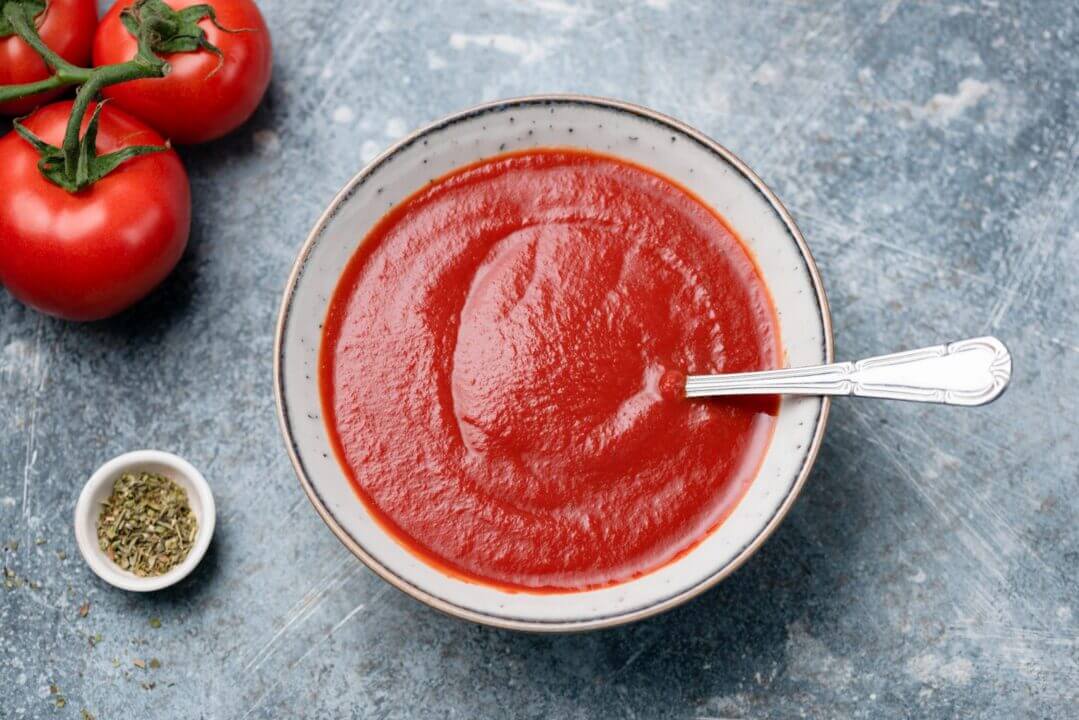
Tomato Paste Cold Break 28-30%
Cold break tomato paste at 28-30% Brix, produced from Egyptian tomatoes harvested at full maturity. The cold break process holds the mash at a lower temperature during extraction, which preserves the natural pectin and gives the paste a lighter, more fluid body than hot break equivalents. Packed aseptically without additives or preservatives.

Specifications




Suitable For
Packaging
Packaging
Weight
Storage
 20′ FCL
40′ FCL
Packaging
Sizes
Storage
20′ FCL · Loose
40′ FCL · 21 Pallets
 Wooden Ton Bins
Packaging
Weight
Storage
20′ FCL
40′ FCL
The Cold Break Process
Cold break refers to the temperature applied to the tomato mash after crushing. Holding the mash at roughly 65–75°C is low enough that the natural pectinase enzymes stay partly active, and they begin to break down the pectin chains before the paste is concentrated.
That sounds like a drawback, but for a large part of the market it is exactly what the buyer wants. Less intact pectin means a thinner, more pourable paste — Bostwick runs 6.0–10.0 cm at 12.5 Brix against 4.0–6.0 cm for our hot break line. When the paste has to dilute cleanly into a liquid, that difference decides whether the end product is smooth or grainy.
The lower processing temperature also protects colour. Cold break paste holds a/b at 2.00–2.20 rather than the 1.90–2.10 of hot break, and it carries more of the fresh tomato flavour that heat strips out. For juices, beverage bases and any product where the tomato is tasted rather than cooked into a sauce, that retained character is the whole point.
The finer mesh screen at 0.4–0.8 mm removes more seed and skin fragments than the hot break specification, which matters when the paste will be consumed without further straining.
Every batch is produced from fresh Egyptian tomatoes without additives or preservatives, in conformity with Egyptian Quality Standards No. 132-1/2015, and filled aseptically for a 24-month ambient shelf life.
Supply Across Three Harvests
Tomato paste is a seasonal product pretending to be a year-round one. Most of the world’s supply is pressed during a short harvest window and then held in aseptic storage until the next crop arrives. The longer a paste sits before it reaches you, the more colour and flavour it loses.
Egypt is unusual here. Three separate crops — winter from January to March, summer from June to August, and the Nile crop from November to December — put fresh fruit through the line across eight months of the year. For cold break specifically this matters more than it does for hot break, because the qualities that make cold break worth buying are the ones that fade first in storage.
IQG Foods grows tomatoes on its own farms alongside contracted growers, which lets us match variety to season and hold the specification steady from one crop to the next. In practice that means the paste you order in March and the paste you order in November should test the same.
Related Products